What You Need To Know About Having A Tooth Extracted
Your care and well-being are our top priorities. Every member of our skilled team strives to ensure your comfort and a stress-free experience. While we do everything we can to preserve your natural smile, sometimes extracting a tooth is necessary to protect your oral health and overall well-being.
Common Reasons We May Recommend an Extraction
-
A baby tooth that is over-retained, severely decayed, or damaged
In most cases, a baby tooth will fall out as scheduled when the permanent tooth begins to erupt. Occasionally, though, a baby tooth remains firmly attached because its roots have failed to resorb or it has fused to the bone. Over-retained baby teeth can disrupt the development and alignment of your child's smile. We monitor your child's growth and will advise you if extraction is needed to help the permanent tooth come in properly.
-
A permanent tooth with extensive decay that cannot be restored
Untreated decay starts as a small defect but continues to compromise healthy tooth structure as it works deeper into the tooth. Without proper care, a cavity can lead to significant damage, nerve problems, infection, and serious consequences for your health. When a tooth has sustained too much structural damage and cannot be restored, extraction may be required.
-
A permanent tooth that is severely fractured or cracked and cannot be saved
Chips, cracks, and fractures vary in severity. The extent of damage determines whether there is enough intact tooth structure to save the tooth. When too much structure or the root has been compromised, extraction may be necessary.
-
Advanced gum disease that has compromised the tooth's supporting tissues
Gum disease is the most common cause of tooth loss in adults. When left untreated, periodontal disease affects the hard and soft tissues supporting your teeth, leading to pocket formation, gum recession, and bone loss. As the disease progresses, teeth ultimately loosen, fall out, or require extraction.
-
Poorly positioned, impacted, or decayed wisdom teeth
Wisdom teeth are the last permanent teeth to develop and come into place. Often, they do not have sufficient room to erupt, are not developing correctly, develop extensive decay, or cause issues for adjacent teeth and surrounding tissues. While wisdom tooth extraction is sometimes recommended for older patients, early removal of problematic third molars in young adults is more common.
-
Overcrowded teeth
When the jaws are not large enough to accommodate all the permanent teeth, crowding and misalignment result. As part of an orthodontic treatment plan to optimally align teeth and establish an attractive, healthy, and functional bite, extraction of select permanent teeth may be required.
How Is a Tooth Extraction Performed?
Whatever the reason for extraction, you can rest assured that your care is in the best of hands. As the first step, we review your medical and dental histories and discuss any special considerations.
It's essential to inform us of any existing medical conditions or medications you are currently taking. In some situations, extra precautions—including premedication with antibiotics, a change in medication, or medical clearance—may be required. Follow all our pre-surgical instructions and let us know if you are sick or have developed symptoms on the day of your appointment.
Our goal is to reduce any anxiety and help ensure your comfort. We'll discuss medical considerations, go over pre-surgical instructions, and review post-surgical recommendations, including whether replacing the extracted tooth is needed and the best options for doing so.
To thoroughly assess the tooth and determine the type of extraction required, we perform a comprehensive examination and take digital radiographs as indicated. Extractions are typically categorized as either simple or surgical.
What Is a Simple Extraction?
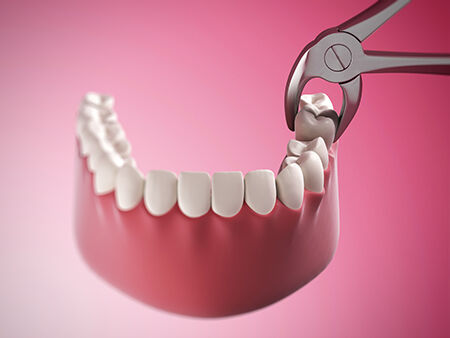
When the tooth is clearly visible in the mouth and the root anatomy is not extensively hooked, fused to the surrounding bone, or otherwise unusual, it usually falls into the category of a simple extraction. Once the tooth and surrounding tissues are sufficiently numbed with local anesthesia, we gently loosen the tooth and remove it.
What Is a Surgical Extraction?
A surgical extraction is more complex and may be needed when a tooth has not fully erupted, has broken at the gum line, or has roots that are curved or fused to bone. This procedure may involve making a small incision in the gum tissue or removing a small amount of bone to access and remove the tooth safely.
After Your Extraction
Following your extraction, we provide detailed post-operative instructions to promote healing and minimize discomfort. You may experience some swelling and mild discomfort, which can typically be managed with ice packs and over-the-counter or prescribed pain medication. We'll schedule a follow-up visit to monitor your healing and discuss any next steps, such as tooth replacement options.